Thanos Squid Game: What Happens When Marvel’s Titan Meets Netflix’s Deadly Arena?
 Malina Joseph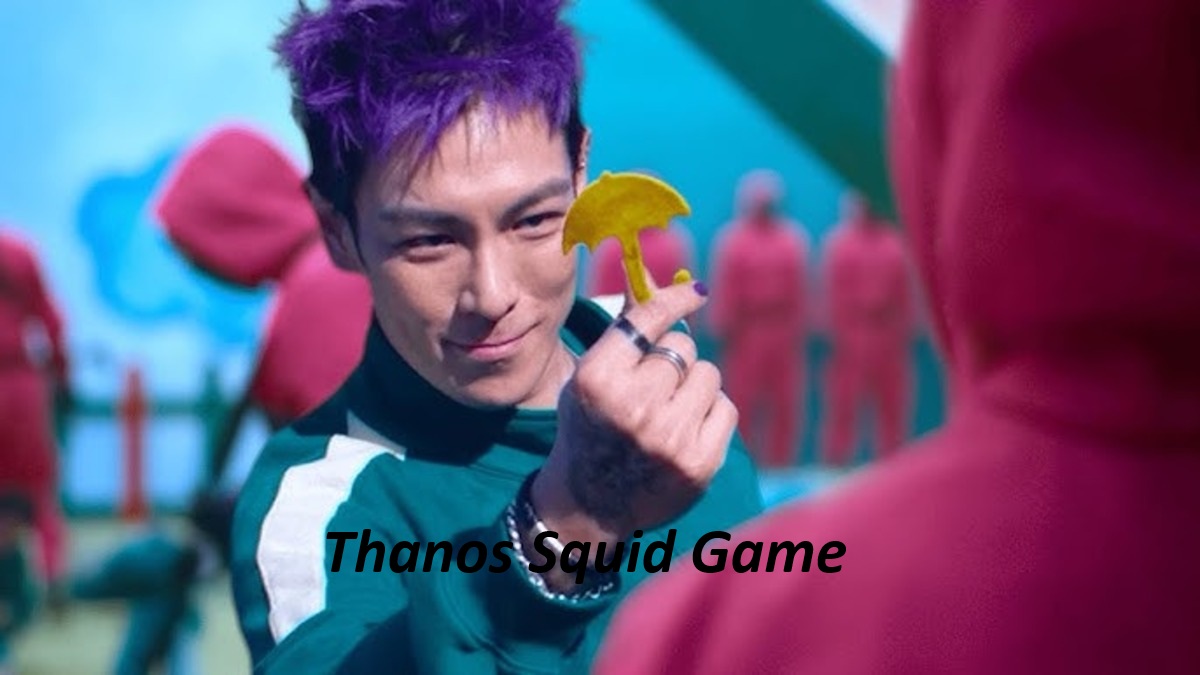
Thanos Squid Game
The Thanos Squid Game internet has a strange way of merging worlds that were never supposed to collide. One such crazy crossover idea that has been circulating is Thanos Squid Game. On one side, you have Thanos, Marvel’s most feared villain with a passion for balance and destruction. On the other side, you have the twisted survival challenge of Squid Game, where players gamble their lives for a shot at financial freedom. Put them together, and you get a mashup that is both terrifying and oddly fascinating.
But what exactly makes this crossover so compelling? Could Thanos Squid Game survive the Squid Game? Would he even need to? And more importantly, what happens if the all-powerful Titan himself is the game master? Let’s break down this pop culture mashup in detail.
The Origins of Thanos Squid Game: Two Worlds, One Obsession with Survival
Thanos Squid Game, introduced in Marvel comics and later dominating the big screen in the Avengers films, is obsessed with one thing—balance. He believes that the universe suffers from overpopulation, and his solution is chillingly simple: wipe out half of all life. With the power of the Infinity Gauntlet, he actually succeeded, snapping his fingers and erasing billions in an instant. Thanos doesn’t see himself as a villain; he sees himself as a savior carrying out the universe’s toughest job.
On the flip side, Squid Game—a South Korean Netflix masterpiece—focuses on ordinary, desperate humans. They’re broke, crushed by debt, and willing to risk everything for money. The games are brutal, ranging from “Red Light, Green Light” to glass bridge crossings, and failure means death. Unlike Thanos Squid Game’ universal genocide, the Squid Game doesn’t involve cosmic stones, but it’s equally merciless in deciding who gets to live and who dies.
At first glance, the two stories couldn’t be more different. One is intergalactic and philosophical, the other grounded and human. But if you look closer, both explore the harsh realities of survival, power, and sacrifice. That’s why the crossover feels strangely natural.
What If Thanos Was a Player in the Squid Game?

Let’s imagine Thanos stripped of his gauntlet and dropped into the Squid Game arena. The giant Titan standing alongside desperate humans would be a surreal sight. How would he perform in the games?
For physical challenges like Tug of War” or “Red Light, Green Light, Thanos Squid Game would be nearly unstoppable. His size, strength, and combat skills would give him an unfair advantage. Picture the game where players cut shapes out of honeycomb candy—Thanos’ patience and precision would shock everyone. He might carve the star with his bare fingers while others sweat bullets.
But here’s the twist: Squid Game isn’t only about brute strength. It’s about strategy, psychology, and human nature. Could Thanos form alliances? Would he sacrifice others for his own gain, or would his obsession with balance make him play by different rules? If we go by his cinematic portrayal, Thanos might eliminate players not out of greed but because he believes only the most “worthy” deserve to survive.
This creates a unique paradox. Unlike desperate humans clinging to money, Thanos doesn’t need wealth. His goal isn’t personal gain—it’s universal order. So while most players fight to escape poverty, Thanos would play the Squid Game as a test of philosophy: to prove who deserves to live.
What If Thanos Squid Game Was the Game Master?
Now, let’s flip the script. What if Thanos wasn’t a player, but the Front Man or even the mastermind behind Squid Game? Honestly, that feels way more fitting.
Imagine Thanos designing the games. Instead of sugar honeycombs, players might be tasked with holding up entire planets. Instead of marbles, they could gamble the lives of half their loved ones. And of course, the finale wouldn’t be Squid Game—it would be Thanos’ infamous snap. Half of the surviving players would disappear, regardless of skill, luck, or strategy.
This aligns perfectly with his twisted ideology. In his mind, Squid Game wouldn’t be about money—it would be about balance. He’d argue that only the strongest, smartest, and most resilient deserve to continue living. Everyone else? They were always doomed.
The horrifying part is that, unlike the human game masters of Squid Game who do it for entertainment and profit, Thanos would actually believe he’s doing the right thing. That makes his version of Squid Game infinitely scarier.
Themes That Connect Thanos Squid Game
The more you think about it, the more you realize that Thanos and Squid Game actually share a disturbing number of themes. At first glance, one is a cosmic villain and the other a human survival drama, but underneath the flashy visuals, both dive deep into the harsh realities of existence and what it means to survive when the odds are stacked against you.
One of the clearest connections is the idea of “survival of the fittest.” In Squid Game, players are thrown into seemingly childish games that turn into brutal life-or-death challenges. Those who are clever, strong, or lucky enough to endure move forward, while the weak are eliminated without mercy. Thanos Squid Game’ worldview mirrors this on a universal scale. His infamous snap was essentially the largest “game” of survival ever played, with half of all living beings vanishing in an instant. To him, the survivors were the ones meant to push the universe forward in balance.
Another major theme is sacrifice. Squid Game constantly forces players to choose between morality, friendship, and their own survival. Trusting the wrong person often means death, and alliances can crumble in an instant. Thanos, too, embodies sacrifice in the most haunting way. He gave up his beloved daughter, Gamora, to obtain the Soul Stone—a choice that proved his devotion to his twisted mission. In both cases, the message is clear: survival often demands unbearable trade-offs that leave scars long after the game—or the snap—ends.
Finally, there’s the unsettling theme of the illusion of choice. Squid Game presents itself as voluntary; players technically sign up to join. But in reality, crushing debt and poverty leave them with no true alternatives. Similarly, Thanos Squid Game frames his genocidal plan as a “fair” solution for the greater good, but in doing so, he strips away the very freedom of choice from countless beings. Both stories remind us that sometimes the freedom we think we have is nothing more than an illusion, designed to make us feel in control when we really aren’t.
These overlapping themes highlight why a Thanos-Squid Game crossover feels strangely natural. One story unfolds on a galactic stage and the other in a hidden arena on Earth, yet both challenge humanity to reflect on survival, morality, and the limits of free will in the face of overwhelming power.
Could Humanity Survive a Thanos Squid Game?
Now comes the ultimate question: If Thanos really merged his ideology with Squid Game’s mechanics, could humanity survive?
The sad truth is that most of us wouldn’t stand a chance. Squid Game already exposes the weaknesses of human greed, fear, and desperation. Add Thanos’ unforgiving balance logic to the mix, and survival rates would drop even lower. Players wouldn’t just need physical skill—they’d need a philosophical reason to exist in Thanos’ eyes.
On the flip side, some argue that humanity’s creativity and resilience could surprise even Thanos. Just like how Gi-hun outsmarted the Squid Game system in the series, maybe someone clever enough could expose the flaws in Thanos Squid Game’ ideology and challenge him. After all, the Avengers did it—why not a broke Squid Game contestant?
Why Fans Love the Thanos Squid Game Idea
At the end of the day, the crossover of Thanos and Squid Game is more than just a meme. It represents fans’ love for exploring “what if” scenarios. These thought experiments let us see beloved characters in new lights, combining the epic with the ordinary.
Fans love imagining Thanos struggling with something as simple as cutting out a honeycomb shape. They also enjoy picturing him as the ultimate game master, designing tests that make the original Squid Game look like child’s play. It’s ridiculous, it’s dark, and it’s hilarious at the same time.
Most importantly, it makes us think. Squid Game already challenged us to consider how far people will go for money. Add Thanos into the mix, and the question becomes deeper: How far would you go to prove your existence has meaning in a universe that demands balance?
Final Thoughts: Thanos Squid Game Is the Crossover We Didn’t Know We Needed
Thanos Squid Game may never happen on screen, but in the realm of fan theories and imagination, it’s gold. It blends two of the most chilling pop culture phenomena of our time—Marvel’s Titan with a god complex and Netflix’s death game that mirrors society’s greed.
Whether Thanos Squid Game is a player or the mastermind, the idea pushes us to think about survival, morality, and human nature. It’s the perfect mix of absurd entertainment and deep philosophical reflection. And honestly, isn’t that what makes the best crossovers so addictive?
So next time you watch Avengers: Infinity War or binge Squid Game, just picture the two worlds colliding. Thanos standing on the glass bridge, or players trembling as he announces the next round. Scary? Yes. Entertaining? Absolutely.
You May Also Read
BetterThisFacts Information by BetterThisWorld
About the Author
