Delta Flight DL275 Diverted LAX: The Full Story of a Trans-Pacific Safety Decision
 Malina Joseph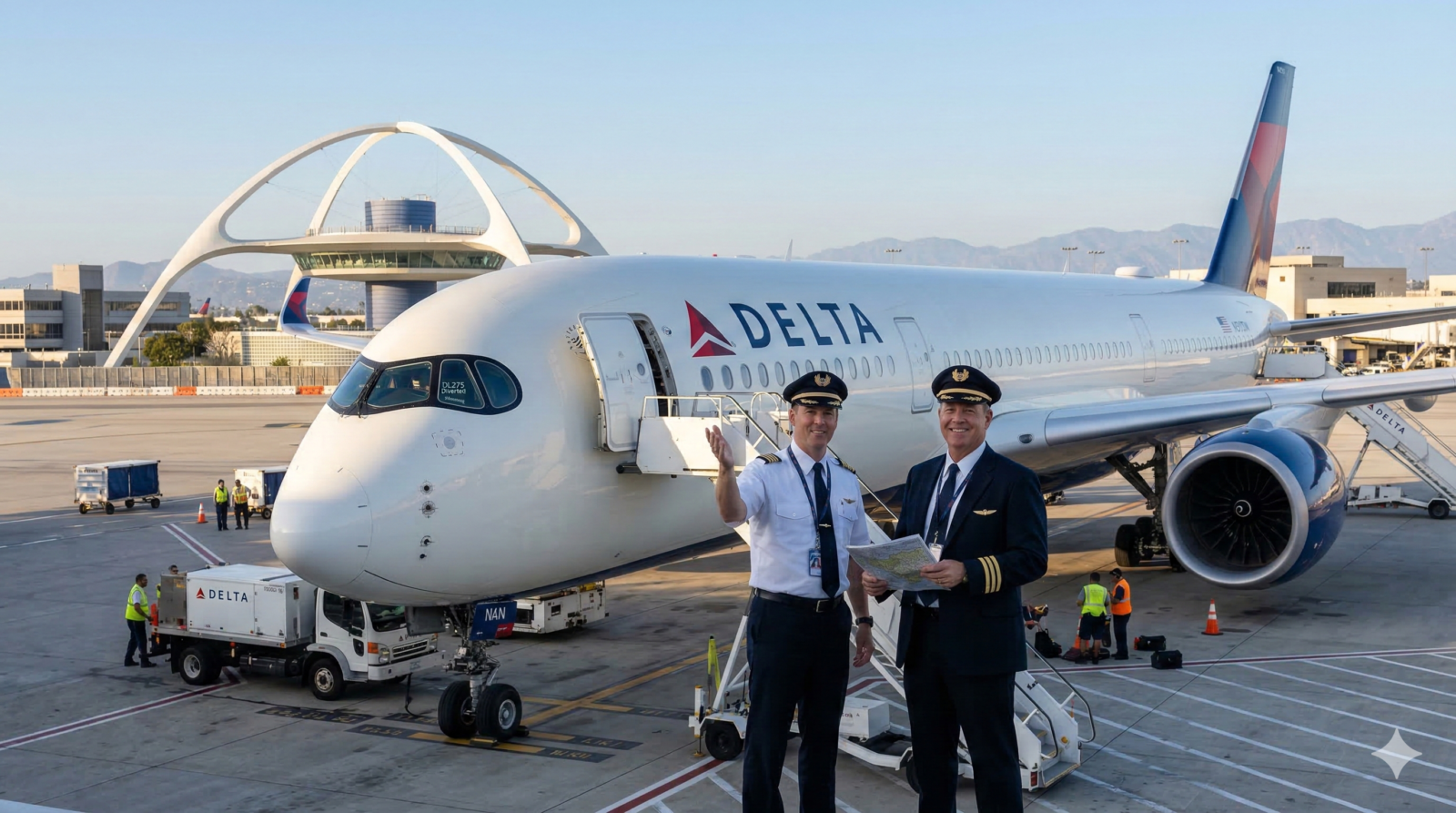
Delta Flight DL275 Diverted LAX
When you board a long flight, you expect to land at your planned destination. But sometimes, the skies have other plans. On May 28, 2025, passengers on delta flight dl275 diverted lax experienced something unexpected. This flight was supposed to go from Detroit to Tokyo. Instead, it landed in Los Angeles. The news spread quickly online. People wanted to know what happened. Was everyone safe? Why did the plane change course? In this article, we will walk through everything about this incident.
We will explain why the diversion happened, how the crew handled it, and what passengers experienced. We will also look at the aircraft involved and the safety systems that worked behind the scenes. By the end, you will understand why this event was not a failure but rather a perfect example of aviation safety in action. Air travel remains one of the safest ways to travel, and stories like this prove it.
The Original Route: From Detroit to Tokyo
Before we talk about the diversion, let us understand the original flight plan. Delta Flight DL275 was operating as a long-haul international flight. It departed from Detroit Metropolitan Wayne County Airport (DTW) in Michigan. The destination was Tokyo Haneda Airport (HND) in Japan . This is a massive journey across the Pacific Ocean. The flight distance is roughly 6,400 miles. Under normal conditions, the flight takes about 13 hours . The aircraft chosen for this route was the Airbus A350-900.
This is one of the most modern and advanced planes flying today. It is designed specifically for long trips like this. The plane features Rolls-Royce Trent XWB engines, known for their efficiency and reliability . Passengers boarded with excitement. Some were heading to Tokyo for business meetings. Others were going on vacation to see cherry blossoms or visit family. Everyone expected a smooth ride across the ocean. And for the first several hours, that is exactly what they got.
When Did Things Change for Flight DL275?
The flight took off without any trouble. The plane climbed to its cruising altitude. Everything seemed perfectly normal. Then, somewhere over the North Pacific, the situation changed. The aircraft was flying at approximately 38,000 feet . This altitude is common for long flights. But at this height, temperatures can drop to 50 degrees below zero or colder. The flight crew noticed something on their instruments. There was a problem with the engine anti-ice system .
This might sound like a small issue. But in aviation, small issues can become big problems if ignored. The anti-ice system is critical. It prevents ice from forming on the engine parts. Ice buildup can disrupt airflow. It can damage engine components. In extreme cases, it can even cause engine failure. The pilots knew they could not fly over the ocean for many more hours with this system compromised. They had to make a decision.
Understanding the Engine Anti-Ice System
To really understand why delta flight dl275 diverted lax, we need to talk about ice. Yes, ice on a plane. At high altitudes, the air is extremely cold. If there is any moisture in the air, ice can form quickly on the aircraft . This is dangerous for several reasons. Ice adds weight. It changes how air flows over the wings. Most importantly, ice inside the engine can cause serious damage. The engine anti-ice system prevents this by heating critical engine areas. It uses hot air from the engine itself to keep ice from forming .
When this system shows a fault, pilots cannot ignore it. Without it, flying through cold, icy conditions becomes very risky. On a trans-Pacific flight, you cannot simply land quickly if the weather turns bad. You are hours away from the nearest airport. The pilots on DL275 understood this perfectly. They knew that continuing to Tokyo would mean many more hours over open water without full anti-ice protection. That was a risk they were not willing to take.
Why Did the Flight Choose LAX?
When the crew decided to divert, they had several options. They could have turned back to Detroit. They could have headed to Seattle or San Francisco. But they chose Los Angeles International Airport (LAX) . Why LAX? There are several good reasons. First, by the time the issue was detected, the plane was closer to the West Coast than to Detroit. Returning all the way to Michigan would have added hours to the flight . Second, LAX is a major Delta hub . This means Delta has maintenance facilities there.
They have mechanics, spare parts, and tools to fix large aircraft like the A350. Third, LAX has long runways that can handle big planes fully loaded with fuel . Fourth, the airport has excellent emergency services if needed. Finally, choosing LAX made sense for passengers. As a major international airport, it offers many options for rebooking flights to Tokyo. The decision was strategic and smart.
The Crew’s Professional Response
Let us talk about the people in the cockpit. The pilots on Delta Flight DL275 showed true professionalism. When they detected the anti-ice system fault, they did not panic. They followed their training. They assessed the situation. They communicated with Delta’s operations center. They checked weather conditions along possible diversion routes. Then they made the call to head to LAX . After making this decision, they informed the passengers. The announcement was calm and clear.
There was no emergency declared. There were no mayday calls. This was a planned, controlled diversion for safety reasons . The pilots also adjusted the flight. They likely descended to a lower altitude where conditions were less demanding on the aircraft systems. Throughout the diversion, they maintained communication with air traffic control. They coordinated the arrival at LAX. When the plane finally touched down, it was a smooth, normal landing. This is exactly how a diversion should look when done correctly.
What Passengers Experienced Onboard
Imagine sitting in your seat, watching a movie or trying to sleep. Then the captain comes on the speaker and says the plane is turning around. How would you feel? Passengers on DL275 experienced a mix of emotions. Some felt confused. Others were concerned . But according to reports, the cabin remained calm . The flight attendants did an excellent job. They kept everyone informed. They continued serving snacks and drinks. They answered questions with reassurance.
One passenger later shared that the crew was incredible, offering extra snacks and even making jokes to keep spirits up . Another described watching the flight map and seeing the plane make a graceful U-turn over the Pacific . This transparency helped. When passengers understand what is happening, they feel less anxious. The fact that the plane continued flying smoothly without any turbulence or strange noises also helped. There was no visual sign of danger. Just a change in direction.
The Safe Landing at Los Angeles International
After approximately five hours of flying following the diversion decision, Delta Flight DL275 approached Los Angeles . The time was just after 1 a.m. local time . The pilots guided the massive Airbus A350-900 down to the runway. They touched down on Runway 06R . The landing was smooth and routine. Emergency vehicles were likely standing by as a precaution, but they were not needed. The plane taxied to a gate. Passengers gathered their belongings.
They walked off the plane not in Tokyo, but in California. It was not the destination they had planned. But they were safe on the ground. And that is what matters most. The aircraft had flown for over 12 hours total, nearly the full scheduled time to Tokyo, before landing at LAX . That is a long time to be in the air, especially when you are not going where you expected.
After Landing: Passenger Support and Rebooking
Once the plane was on the ground, Delta’s support system kicked into action. The airline did not just leave passengers to figure things out on their own. They provided assistance immediately. Passengers received hotel vouchers for places to stay . They got meal vouchers for food . Delta staff helped rebook everyone on new flights to Tokyo. Some passengers were able to continue their journey the very next day .
Others chose to stay in Los Angeles for a day or two, turning an unexpected situation into a mini-vacation . This kind of support matters. Flight diversions disrupt plans. They cause stress and inconvenience. But when an airline takes care of its passengers, it makes a big difference. Many travelers later shared positive experiences about how Delta handled the situation. They appreciated the transparency and the help they received .
The Aircraft: Airbus A350-900 Repairs
What about the plane itself? After the passengers deplaned, the Airbus A350-900 needed attention. Delta’s maintenance team in Los Angeles got to work. They inspected the aircraft thoroughly. They confirmed the issue with the engine anti-ice system . Then they performed the necessary repairs. The entire process took about 18.5 hours . After the work was complete, the plane underwent testing. Engineers needed to verify that everything was working correctly.
Once they were satisfied, the aircraft was cleared to return to service . This is standard procedure. Every mechanical issue must be properly addressed before a plane flies again. The fact that the repair happened relatively quickly shows the value of diverting to a major hub like LAX. At a smaller airport, the plane might have been stuck for days waiting for parts or specialized mechanics.
Detailed Incident Overview Table
Here is a complete breakdown of the Delta Flight DL275 diversion incident. This table gives you all the key facts at a glance.
Why This Diversion Was the Right Call
Some people might wonder if the diversion was truly necessary. Could the flight have continued to Tokyo? Technically, yes. The plane could have kept flying. But should it have? Absolutely not. Here is why. The flight still had many hours left over the Pacific Ocean. That means no airports nearby if the situation got worse . The anti-ice system is not optional. It is a critical safety component.
Flying without full protection through cold, high-altitude conditions is risky. Ice can form quickly. If ice damaged the engine, the consequences could be severe. The pilots made a decision based on safety, not convenience. They chose the cautious path. In aviation, this is always the right choice. You do not wait for a small problem to become a big emergency. You act early. That is exactly what happened here. The system detected an issue. The crew responded. Everyone stayed safe.
What Travelers Can Learn From This Incident
This story offers valuable lessons for anyone who flies. First, trust the crew. The pilots and flight attendants on DL275 handled everything professionally . They knew what to do. They kept everyone calm. When you fly, remember that your crew trains for situations like this. Second, pack a small emergency kit in your carry-on. Include snacks, a phone charger, and maybe a change of clothes. If your flight diverts, you will be glad you have these items . Third, consider travel insurance.
Good policies cover flight interruptions . They can reimburse you for unexpected expenses. Fourth, stay calm. Diversions are rare, but they do happen. Panic does not help anyone. Finally, remember that safety comes first. Yes, diversions are inconvenient. But they happen because airlines prioritize getting you to the ground safely over getting you to your destination on time. That is a trade-off worth making.
Frequently Asked Questions
What exactly caused Delta Flight DL275 to divert to LAX?
The flight diverted because of a technical issue with the engine anti-ice system . This system prevents ice from forming on the engine at high altitudes. The pilots decided it was safer to land and fix the problem rather than continue over the ocean.
Was anyone hurt during the diversion?
No, there were no injuries to passengers or crew . The plane landed safely and smoothly at LAX. The diversion was precautionary, not an emergency response to a dangerous situation.
How long was the flight delayed?
Passengers experienced a significant delay in reaching Tokyo. The aircraft itself was on the ground in Los Angeles for about 18.5 hours for repairs . Passengers were rebooked on other flights, with some leaving the next day.
Did Delta provide hotels and meals for passengers?
Yes. Delta arranged hotel accommodations and meal vouchers for all affected passengers . The airline also helped rebook everyone on new flights to Tokyo.
Is the Airbus A350-900 a safe plane?
Yes, the Airbus A350-900 is one of the safest and most advanced commercial aircraft in the world . In this case, its monitoring systems detected a problem early, allowing the crew to take action before any danger occurred.
How common are flight diversions?
Diversions are not extremely common, but they happen regularly in aviation . Common reasons include medical emergencies, weather problems, and technical issues like the one on DL275. Airlines and pilots train extensively for these situations.
Final Thoughts on Delta Flight DL275 Diverted LAX
The story of delta flight dl275 diverted lax is not a story of failure. It is a story of safety systems working exactly as they should. A modern aircraft detected a problem. Highly trained pilots recognized the risk. They made a smart decision to land at a well-equipped airport. Passengers were treated with care and respect. The plane was fixed and returned to service. Everyone reached their destination safely, even if it took a little longer than planned.
This is the reality of modern aviation. Things sometimes go wrong. But the systems built to protect passengers are robust and effective. The next time you buckle your seatbelt for a long flight, remember this story. Remember that the crew in the cockpit and the cabin are there to keep you safe. They make decisions based on your well-being, not on schedules. Fly with confidence, knowing that even when flights divert, you are in good hands.
About the Author
