Athenahealth Explained for US Clinics: EHR, EMR, Login, Portal, Reviews, and athenaOne Surgical
 Malina Joseph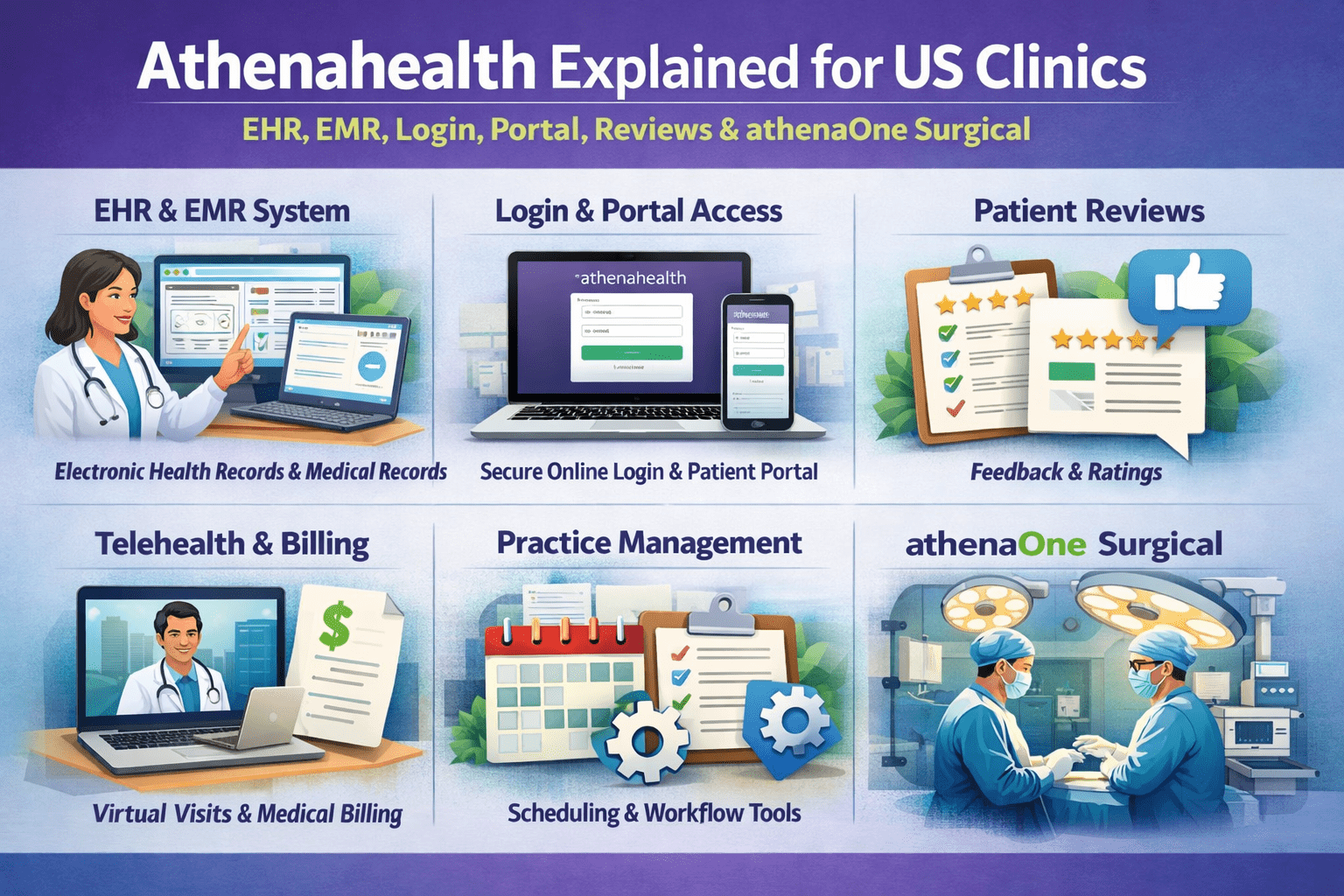
Athenahealth
Athenahealth: A Practical Guide for Clinics, Staff, and Patients in the USA
Running a medical practice in the United States brings constant pressure. Visits move fast. Billing rules feel strict. Paperwork can stack up by lunch. athenahealth is built to calm that daily rush by keeping records, patient communication, and financial work in one connected place. Many teams like that they can stay on one path instead of bouncing between tools. When screens feel organized, your day feels smoother. This guide answers real questions people search, like athenahealth login, athenahealth provider login, athenahealth patient portal, and how the platform fits workflows across clinics and surgery settings.
What Is Athenahealth and What Does It Do?
athenahealth is a healthcare software platform that helps medical practices handle daily work in a cleaner, more connected way. Many offices use it to manage charting, appointments, billing tasks, and patient messages without juggling several separate systems. A common setup is a unified platform experience where clinical notes and financial work stay closely linked, which reduces double entry and cuts down on missed steps. In a real clinic day, that can mean fewer surprises at checkout, fewer billing gaps, and faster follow-ups after a visit. Staff also benefit because key patient details stay easier to find, and teams can work with more confidence. When patients feel that care is organized, trust rises fast, and they stick with the practice longer.
Athenahealth EHR vs Athenahealth EMR: Simple Meaning, Real Impact
People often search athenahealth ehr and athenahealth emr and assume they mean two different products. In daily clinic talk, many teams use both terms the same way. A simple explanation works best: an EMR is the digital chart inside one practice, while an EHR supports the bigger care picture across a patient’s journey. What matters is not the label. What matters is speed, clarity, and fewer loose ends. Can your providers document a visit without fighting the screen? Can staff find history quickly? Can the team close out tasks by the end of the day? When the workflow stays clean, the system feels powerful. When it feels messy, even strong tools feel frustrating.
Athenahealth Login and Provider Login: What to Expect
Search volume for athenahealth login and athenahealth provider login is high because access is the start of every shift. Most clinics set roles so each team member sees what they need, and nothing extra. That protects privacy and keeps screens simpler. A strong clinic habit is a short onboarding checklist that covers where to sign in, what the home screen should look like, and who to contact when access does not match the role. Login problems are not always password problems. Many times, the user is on the wrong sign-in path, the role is not assigned correctly, or training missed a key step. Fix those basics and your day feels lighter.
Athenahealth Patient Portal: What Patients Can Do
The athenahealth patient portal is a patient’s home base between visits. Patients want easy access to results, visit summaries, payments, and messages. When that access works smoothly, patients feel informed and respected. Clinics also benefit because the portal can reduce call volume and cut down on repeated questions. A simple portal launch plan works best: confirm the patient’s contact info, give clear steps at checkout, and keep instructions short. Patients quit when the process feels long. A portal is not “extra.” It is part of the care experience. When portal usage rises, refill requests become clearer, payment confusion drops, and front desk teams get breathing room.
Athenahealth Portal Tips for Clinics: Make It Easy in Real Life
People searching athenahealth portal often feel stuck. Clinics can reduce that by making portal access feel effortless. Put one portal option on your website and keep the wording consistent across reminders and printed handouts. A small portal card at checkout can help patients remember their next step at home. Inside the clinic, assign one staff member to track portal problems and report patterns. Then fix the top pain points first. Good portal habits can feel small, but they change daily operations. When patients can message, view results, and pay bills without confusion, the practice feels calmer. That calm becomes part of your reputation in the community.
Athenahealth Marketing: What Works for US Clinics
Searches for athenahealth marketing often come from practice owners who want stable growth. A simple truth is that patient experience drives growth more than fancy slogans. People want quick access, clear communication, and clean billing. When your systems support those basics, patients leave better feedback and refer friends. Focus on practical clinic metrics: new patient calls, kept appointments, time to next available visit, and review volume. Then connect each metric to one change, like better reminders, clearer portal onboarding, or faster responses. If your patients feel respected, they talk about it. In the US market, that word-of-mouth effect is powerful and steady.
Athenahealth Reviews: What People Praise and What Triggers Complaints
athenahealth reviews are not all the same, and that is normal for major healthcare systems. Some users praise smoother workflows and easier patient communication. Others complain about training gaps or support delays. The biggest driver is setup quality. Two clinics can use the same tool and feel opposite. A clinic that trains staff, keeps templates clean, and assigns clear roles often reports a much better experience. A rushed rollout creates stress and resentment. If you want better results, treat launch like a real project. Use short training blocks, keep a simple “top tasks” guide for each role, and fix one frustration every week. That steady improvement shows up in staff mood and patient satisfaction.
Athenahealth Competitors: How to Compare in the US Market
People search athenahealth competitors because picking a clinical system is a big decision. Competitors vary by practice size, specialty, and setting. Some products fit large hospital systems. Others fit smaller ambulatory clinics that need quick workflows. Your best comparison question is simple: does the system match how your team works every day? During demos, use real scenarios: a busy morning schedule, prior auth friction, a patient who needs quick follow-up, and a bill question at checkout. If the system handles those moments well, it will feel easier to live with long-term. Comparing brands is fine, but comparing real workflows is smarter.
Athenahealth Customers List and Users Email List: What’s Real and What’s Risky
Searches like athenahealth customers list and athenahealth users email list usually come from people trying to sell into clinics. This is a place where smart judgment matters. Healthcare relies on trust, and aggressive list buying can damage your brand fast. Even if a list claims to be “verified,” outreach without consent can feel invasive and can create compliance problems. A better path is value-first outreach. Share helpful tools, clear demos, and real solutions to clinic problems. Clinics respond to calm, respectful communication. If you want long-term success in the US healthcare space, protect trust like it is your most valuable asset, because it is.
Athenahealth Email Format: Professional Communication That Works
People look up athenahealth email format when they want direct contact. Email formats inside a company can change, and guessing patterns leads to bounced messages and spam flags. If you are reaching out to clinics or partners, keep communication clean and respectful. Use verified contact routes. Keep the message short. State your reason in one clear sentence. Offer one simple next step. This approach works better than long emails and pressure language. If you are a patient or staff member needing help, the best outcomes usually come from the official support or portal routes tied to your organization, since those routes are built to land your request in the right place.
Athenahealth Surgical Vertical and athenaOne Surgical: What It Means
The athenahealth surgical vertical and athenahealth athenaone surgical terms point to a growing focus on outpatient surgery. In the United States, more care is shifting into ambulatory surgery settings, and teams want tools that fit that workflow. Surgery has strict timing. Documentation must stay tight. Charge capture needs accuracy. Small delays can ruin a day. If you are evaluating a surgery-focused workflow, ask for a demo with your real cases, not generic examples. Ask how pre-op tasks are handled, how day-of steps are tracked, and how post-op follow-ups flow. A good fit feels like fewer workarounds and more confidence.
Athenahealth Asana Integrations: Cleaner Task Flow Without Chaos
Teams search athenahealth asana integrations because clinics often need better task tracking for non-clinical work. Some teams use task tools for onboarding, credentialing checklists, training plans, and internal projects. A key rule is to keep patient details out of general task tools unless the setup is approved and protected properly. If your team does use a task system, use internal codes instead of patient names, keep tasks focused on workflow steps, and train staff on safe habits. When those guardrails are in place, task tracking can reduce missed steps, speed up internal projects, and help teams feel less overwhelmed during busy weeks.
Athenahealth Logo: How to Use Branding with Care
People search athenahealth logo for marketing materials, proposals, and vendor pages. Branding should be handled with care. Clinics can mention the platform they use, but should avoid language that sounds like endorsement. Vendors and partners should use approved assets and keep the logo unchanged. Clean brand use sends a strong signal: you are professional, careful, and respectful. In healthcare, those signals matter. Patients trust clinics that look organized. Practices trust partners that communicate clearly and follow rules. If your materials look premium and accurate, you stand out in a positive way without needing extra noise.
Jobs at Athenahealth and “Athenahealth Jobs Chennai”: How to Think About Roles
Many people search jobs at athenahealth and even athenahealth jobs chennai while exploring career options. Job listings change based on the hiring cycle, so the safest approach is to check current postings and match them to your skill set. If your goal is a US-focused career path, pay attention to location expectations, time zone alignment, and role requirements. Athenahealth careers can span support, operations, product, engineering, and healthcare-focused work. A simple plan helps: pick a role family, build a small portfolio that shows real work, and apply with a clear story about how you solve problems. Calm clarity stands out.
Complete Overview Table
This table summarizes the most common topics people search and what they usually mean in real clinic life. It helps teams explain the platform clearly to staff and patients without getting lost in jargon.
| Topic | What It Means | Practical Insight |
|---|---|---|
| athenahealth | Healthcare technology platform | Supports clinics with connected tools for records, communication, and financial workflows |
| athenahealth ehr / athenahealth emr | Clinical documentation and charting | Focus on workflow comfort, speed, and fewer open tasks at the end of the day |
| athenahealth login | Staff access | Clear roles and short onboarding guides reduce confusion and support tickets |
| athenahealth provider login | Clinician access | Role-based permissions keep screens cleaner and safer for teams |
| athenahealth patient portal / athenahealth portal | Patient self-service | Simple onboarding steps boost usage and reduce calls for results and bills |
| athenahealth reviews | User feedback | Training and setup quality often decide whether users feel satisfied or stressed |
| athenahealth competitors | Market comparison | Compare real workflows and specialty needs instead of brand names alone |
| athenahealth customers list | Market research | Trust-based targeting beats risky list chasing in healthcare |
| athenahealth users email list | Outreach idea | Consent-first communication protects reputation and improves response rates |
| athenahealth email format | Direct contact attempt | Use verified contact routes instead of guessing internal email patterns |
| athenahealth surgical vertical / athenahealth athenaone surgical | Outpatient surgery focus | Ask for demos with real cases and confirm pre-op, day-of, and post-op workflow fit |
| athenahealth asana integrations | Task tracking | Keep patient identifiers out of general task tools unless approved and protected properly |
| athenahealth logo | Branding | Use branding carefully and keep claims clear and respectful |
| jobs at athenahealth / athenahealth jobs chennai | Careers | Job availability shifts, so match skills to current postings and keep applications clear |
FAQs
What is athenahealth mainly used for?
Is athenahealth an EHR or EMR?
How do patients use the athenahealth patient portal?
Are athenahealth reviews mostly positive?
What is the athenahealth surgical vertical?
Is it safe to buy an athenahealth users email list?
Conclusion
A clinic runs best when people feel confident and systems feel organized. athenahealth can support that goal by keeping records, patient communication, and financial workflows closer together. The biggest wins usually come from simple habits: clear roles, short training guides, clean templates, and a portal plan patients can follow in minutes. If you are comparing athenahealth competitors, keep the decision grounded in real workflows and real pressure moments. When a system fits your team, your day feels calmer, your patients feel cared for, and your practice builds a stronger reputation over time.
About the Author
