 Malina Joseph
AI in Everyday Life
AI in Everyday Life (AI) is no longer something we only see in science fiction movies. It has seamlessly become part of our daily routines, changing the way we live, work, and interact with the world. The phrase AI in Everyday Life has gained momentum because, whether we realize it or not, artificial intelligence is quietly influencing nearly every aspect of modern living. From the apps on our phones to the cars we drive, AI has shifted from being a futuristic dream to an everyday necessity.
This article takes a deep dive into AI in Everyday Life, showing how it impacts communication, education, healthcare, entertainment, and even how businesses operate. More importantly, it highlights why understanding AI’s role matters in today’s fast-paced world.
What Does AI in Everyday Life Really Mean?
When people hear “artificial intelligence,” they often imagine robots or machines replacing humans. But the reality is much simpler—and more fascinating. AI in Everyday Life means the subtle use of intelligent technology to make our routines faster, smarter, and more efficient. Think about Google Maps predicting traffic patterns, Netflix recommending shows you’ll probably love, or voice assistants like Alexa answering your random midnight questions.
AI works by analyzing data, learning from patterns, and then making predictions or decisions without needing constant human input. This isn’t just about replacing tasks; it’s about enhancing the quality of life. AI in Everyday Life has become so normal that many people don’t even notice it happening. It’s like electricity—always running in the background, powering the things we use.
So, when we talk about Artificial Intelligence in Everyday Life, we’re really talking about the invisible but powerful ways technology improves decision-making, saves time, and keeps us connected. From students to professionals, everyone is influenced by it, whether consciously or unconsciously.
AI in Everyday Life at Home
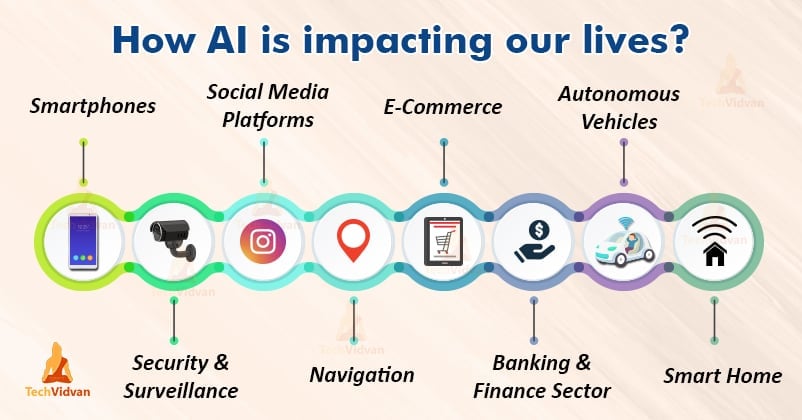
One of the most common places we see AI in Everyday Life is in our homes. Smart devices have transformed houses into hubs of technology. From thermostats that learn your preferred temperature to refrigerators that remind you when you’re running low on groceries, AI is working quietly behind the scenes.
Smart speakers like Amazon Echo or Google Home are excellent examples. You can ask them to play music, control the lights, or even order your groceries. This isn’t just convenience; it’s personalization. The more you use them, the smarter they get, adapting to your lifestyle. This is the essence of AI in Everyday Life—technology that learns from you and makes life simpler.
Even security systems have become AI-driven. Cameras now detect suspicious activity, send alerts, and differentiate between a package delivery and a potential intruder. These advancements prove that Artificial Intelligence in Everyday Life isn’t just about comfort but also about safety and peace of mind.
Communication and AI in Everyday Life
Communication has changed drastically, thanks to AI. Think about how autocorrect fixes your spelling, or how predictive text seems to know exactly what you’re about to type. These little features are all products of AI in Everyday Life.
Social media platforms also rely heavily on AI. Algorithms analyze your activity and show you posts, ads, and videos tailored specifically to your interests. While some criticize this for creating “echo chambers,” there’s no denying that it makes browsing more engaging. This is one of the most noticeable examples of AI in Everyday Life, since billions of people use these platforms daily.
On a more advanced level, AI is breaking language barriers. Tools like Google Translate or real-time transcription apps help people from different countries communicate easily. It’s another way AI in Everyday Life is shrinking the world and connecting people like never before.
Education and AI in Everyday Life
The education sector has seen remarkable changes because of AI in Everyday Life. Online learning platforms such as Coursera, Khan Academy, and Duolingo use AI to personalize lessons for students. Instead of offering a one-size-fits-all program, they adapt to a learner’s pace and strengths.
Teachers also benefit from AI. Automated grading tools, attendance systems, and AI-driven feedback save time, allowing educators to focus more on actual teaching. This shows that Artificial Intelligence in Everyday Life isn’t just for entertainment—it’s a powerful tool for improving learning outcomes.
Students now have access to intelligent tutoring systems that provide 24/7 support. Imagine struggling with math homework at midnight and having an AI-based tutor explain it to you instantly. That’s the beauty of AI in Everyday Life—it makes knowledge accessible anytime, anywhere.
Healthcare and AI in Everyday Life
Perhaps one of the most life-changing uses of AI in Everyday Life is in healthcare. From wearable devices that monitor heart rates to AI systems that predict potential diseases, artificial intelligence is saving lives.
Doctors use AI tools to analyze medical images, detect patterns in patient histories, and even recommend treatments. For patients, apps powered by AI provide reminders for medication, fitness tracking, and mental health support. These small but impactful innovations highlight how AI in Everyday Life can literally be a lifesaver.
In addition, AI-driven telemedicine has grown massively. Patients no longer need to visit hospitals for every consultation. Virtual checkups powered by AI-based platforms make healthcare more accessible and affordable. This is one of the most powerful ways AI in Everyday Life is making a difference.
Entertainment and AI in Everyday Life
Entertainment is another field where AI in Everyday Life is thriving. Streaming platforms like Netflix, Hulu, and Spotify depend on AI algorithms to suggest shows, movies, or songs. These recommendations feel personal because the system learns from your behavior.
Even video games now incorporate AI to create smarter opponents and immersive experiences. Instead of predictable characters, players face AI-driven strategies, making games more exciting and realistic. This interactive approach is a perfect example of how AI in Everyday Life blends fun with technology.
Social media filters, photo editing apps, and even virtual reality experiences are all powered by AI. Every time you snap a picture with a beautifying filter or AR effect, you’re experiencing AI in Everyday Life firsthand.
Business and AI in Everyday Life
Businesses across industries rely on AI in Everyday Life to streamline operations. From chatbots handling customer queries to advanced data analytics predicting consumer behavior, AI is boosting efficiency everywhere.
Retailers use AI to recommend products, while logistics companies depend on AI to plan faster delivery routes. Financial institutions use it to detect fraud and ensure safer transactions. These examples show that AI in Everyday Life isn’t just about personal convenience—it’s reshaping the global economy.
For employees, AI also makes work smarter. Project management tools, automated scheduling, and even AI-driven writing assistants help people accomplish tasks faster. As a result, AI in Everyday Life is enhancing productivity across different job roles.
The Future of AI in Everyday Life
The journey of AI in Everyday Life is only just beginning. As technology continues to advance, AI will play an even greater role in our routines. We might soon see self-driving cars becoming mainstream, AI-powered doctors assisting surgeries, or even smarter homes that anticipate our needs before we speak them.
Of course, with growth come challenges. Privacy concerns, ethical questions, and the fear of job replacement are all issues that need attention. But if managed properly, AI in Everyday Life can bring more positive than negative outcomes.
The key lies in using AI responsibly—balancing innovation with ethics. If we do that, the future of AI in Everyday Life looks brighter than ever.
Conclusion
It’s clear that AI in Everyday Life is not just a buzzword—it’s reality. From the moment we wake up to the time we go to bed, artificial intelligence touches our routines in ways big and small. It powers our smartphones, secures our homes, teaches our kids, entertains us, and even helps save lives.
While challenges exist, the benefits of Artificial Intelligence in Everyday Life are undeniable. It makes life more efficient, more connected, and in many cases, safer. The real question is not whether AI will continue to be part of our lives, but how deeply it will integrate into every decision we make.
In the end, AI in Everyday Life is here to stay—and understanding its role today prepares us for an even more exciting tomorrow.
You May Also Read
About the Author
