Introduction: Why these numbers matter
The Buffalo Bills vs Colts match player stats tell a clear story. They show who helped and who struggled. Fans love numbers. Coaches do too. Numbers can win or lose games. This piece looks at the box score. It studies passing, rushing, and defense. It uses simple words and clear charts of thought. You will see the leaders. You will see key plays. You will also learn what the stats mean for each team. I wrote this to help fans and new readers. Expect plain language and honest opinion. You will find facts, short examples, and useful takeaways. Read on to learn how the Buffalo Bills vs Colts match player stats shaped that game.
Game snapshot: final score and big lines
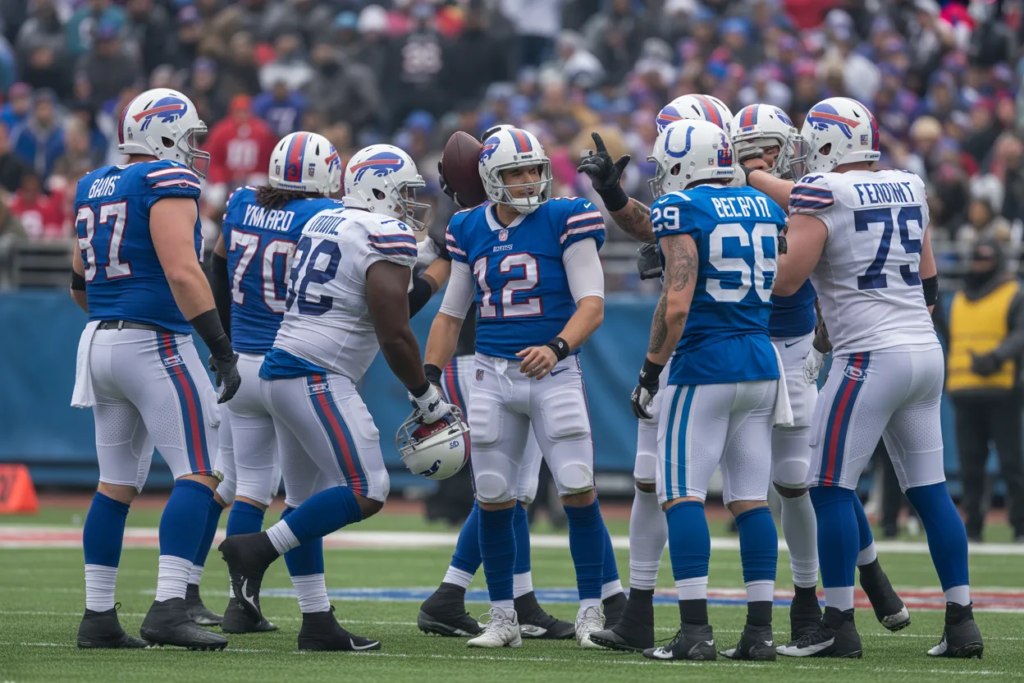
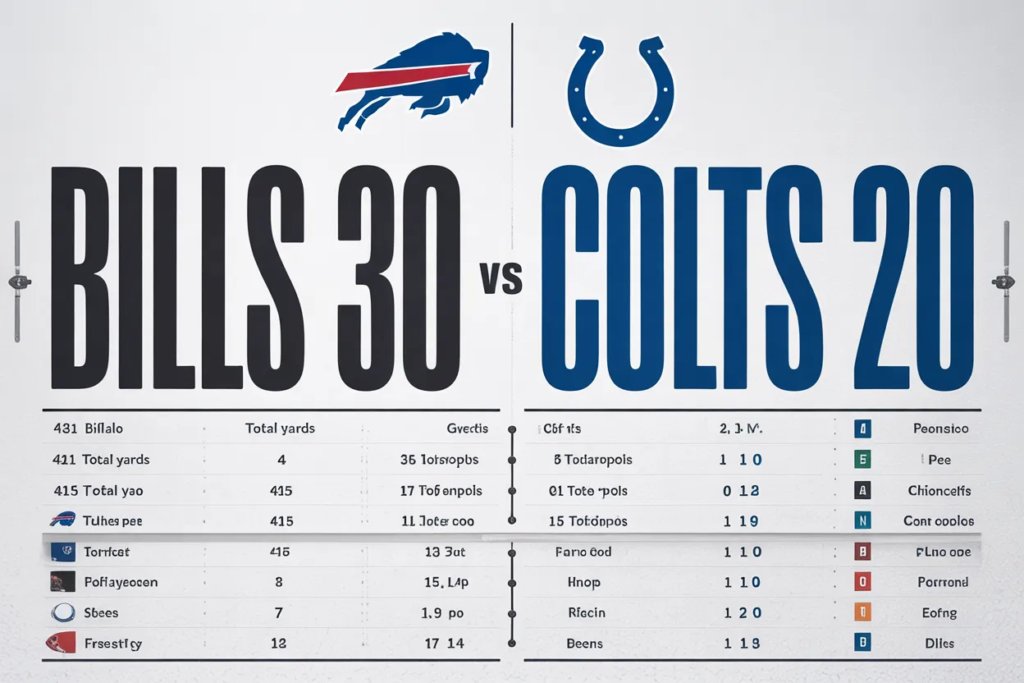
The Bills beat the Colts 30-20 in the meeting. The game took place on November 10, 2024. Buffalo won on the road. Both teams had big plays and big mistakes. The Bills piled up 415 total yards. The Colts had 361 total yards. Buffalo forced four turnovers in that game. Those swaps helped set the tone. Turnovers changed drives and field position. When a team forces turnovers, it often wins. That happened here. The team totals and the turnover edge tell much of the story. These numbers are from the official box score and game recap.
| Team | Final Score |
|---|---|
| Buffalo Bills | 30 |
| Indianapolis Colts | 20 |
Passing: who stepped up through the air
Passing stats show who found the open man. For Buffalo, Josh Allen went 22 of 37 for 280 yards. He did not throw a touchdown that day. He did throw two interceptions. Allen still helped by using his legs when needed. For Indianapolis, Joe Flacco completed 26 of 35 passes for 272 yards. Flacco threw two passing touchdowns. But he also threw three interceptions. Those picks hurt the Colts. Passing numbers often reflect both risk and reward. A high completion rate helps moves. But turnovers can erase that boon. The passing numbers here set up the game’s big swings.
| Player | Team | Comp/Att | Yards | TD | INT |
|---|---|---|---|---|---|
| Josh Allen | Bills | 22/37 | 280 | 0 | 2 |
| Joe Flacco | Colts | 26/35 | 272 | 2 | 3 |
Rushing leaders and what their yards meant
Rushing can soften a defense and control time. James Cook led the Bills with 19 carries for 80 yards and a touchdown. Josh Allen added 50 rushing yards and one rushing score. Together, Buffalo ran for 135 yards. For the Colts, Jonathan Taylor led with 21 carries for 114 yards. Taylor was a clear bright spot. He had a long 58-yard run that helped the Colts move the ball. Still, rushing alone did not win it. The Colts had 121 rushing yards. The Bills’ mix of runs and timely plays gave them an edge in key moments. These rushing figures come from the official box score.
| Player | Team | Attempts | Yards | TD | Long |
|---|---|---|---|---|---|
| James Cook | Bills | 19 | 80 | 1 | 18 |
| Josh Allen | Bills | 7 | 50 | 1 | 15 |
| Jonathan Taylor | Colts | 21 | 114 | 0 | 58 |
| Player | Team | Receptions | Yards | TD | Long |
|---|---|---|---|---|---|
| Mack Hollins | Bills | 4 | 86 | 0 | 31 |
| Khalil Shakir | Bills | 6 | 58 | 0 | 12 |
| Alec Pierce | Colts | 4 | 81 | 1 | 47 |
| Josh Downs | Colts | 7 | 72 | 0 | 23 |
| Player | Team | Tackles | Sacks | INT | FF |
|---|---|---|---|---|---|
| Damar Hamlin | Bills | 8 | 0 | 1 | 0 |
| Taron Johnson | Bills | 7 | 0 | 1 | 0 |
| Grover Stewart | Colts | 6 | 1 | 0 | 0 |
| DeForest Buckner | Colts | 5 | 1 | 0 | 0 |
| Stat | Bills | Colts |
|---|---|---|
| Total Yards | 415 | 361 |
| Passing Yards | 280 | 272 |
| Rushing Yards | 135 | 121 |
| Turnovers | 1 | 4 |
| Sacks | 4 | 2 |
| Time of Possession | 31:40 | 28:20 |
Receiving: who made the key catches
Catches matter when a team needs a first down. For the Bills, Mack Hollins caught 4 passes for 86 yards. Khalil Shakir caught six passes for 58 yards. Dawson Knox and Curtis Samuel chipped in with solid grabs too. Dalton Kincaid had two catches for 24 yards. For the Colts, Alec Pierce had four catches for 81 yards and a touchdown. Josh Downs led Indianapolis with seven catches for 72 yards. Adonai Mitchell made six catches for 71 yards. These receiving stats show depth on both sides. Some catches came at crucial times. The box score lists all targets and yards for each player.
Turnovers: the game changer
Turnovers swung momentum many times. The Bills forced four turnovers in the game. Interceptions and forced fumbles changed drives. Buffalo’s defense converted those chances into points. When a team wins the turnover battle heavily, it gains free scoring chances. The Colts lost the turnover edge. They had three interceptions and a lost fumble. Even with good yardage totals, turnovers can cancel progress. Coaches will point to turnovers after this type of defeat. Fans notice them too. They are easy to spot and hard to forgive. The official stats show how turnovers mattered here.
Defensive impact: who made stops and plays
Defense wins games in bursts. Buffalo had big defensive plays that mattered. Damar Hamlin, Taron Johnson, and Taylor Rapp recorded tackles and an interception apiece. Christian Benford also made key plays in coverage. The Bills totaled 65 tackles and 4 sacks that game. The Colts had 76 tackles and 2 sacks. DeForest Buckner and Grover Stewart were steady on the interior for Indianapolis. Still, the four turnovers the Bills forced made the difference. Defensive stats show who set the tone in the red zone. These numbers are on the team stat sheet and the box score.
Special teams and field position
Special teams can tilt field position and scoring chances. Punts and returns decided how far a team had to go. The Bills and Colts each punted twice in that game. Kick returns and coverage affected starting drives. A good kickoff or punt return can flip the field. Buffalo’s offense took advantage of short fields. The Colts had longer drives at times. In close games, special teams often decide the last points. That was not the main story here. But special teams played their small, steady part. Official game logs list returns and punt averages.
Key moments: plays that shifted momentum
Every game has key plays. A long run, a turnover, or a defensive stop can swing the score. Jonathan Taylor’s 58-yard run gave the Colts a burst. But Buffalo answered with timely drives and points off turnovers. Josh Allen’s rushing touchdown helped seal the game late. The Bills took advantage of three interceptions to limit the Colts’ push. Each turnover turned into points on the scoreboard. Coaches watch those plays on tape. Fans remember them as game highlights. The play-by-play and game recap make the sequence clear.
Player spotlight: Josh Allen and Jonathan Taylor
Josh Allen and Jonathan Taylor were focal points. Allen passed for 280 yards and ran for 50 yards and a touchdown. He showed his dual-threat skills. Taylor ran for 114 yards and gained big chunks on some plays. Both players carried their teams at times. Allen’s two interceptions were costly but he also made big plays with his feet. Taylor’s long run was eye-catching and game-changing in a moment. Both are top-tier players who can shift a game in one play. Their box score lines tell a story of talent and impact.
Coach decisions and timeout use
Coaches decide when to go for it and when to punt. Timeouts and play calls matter late. The Bills took smart risks on fourth down earlier in the season. In this game, Buffalo balanced run and pass well. The Colts tried to pass more, seeking big plays. Turnovers and defensive pressure forced the Colts to change plans. Coaches will review play calls and clock management in the film. These choices shape close games and playoff hopes. You can match coach choices to the box score to see cause and effect.
What the numbers say about each team’s strengths
The Bills’ stats show a balanced offense. They had 280 passing yards and 135 rushing yards. That mix kept the Colts’ defense guessing. The Bills also excelled at creating turnovers. The Colts showed strength in running the ball and moving the chains. Jonathan Taylor ran hard and found space. But too many turnovers hurt Indianapolis. Team totals show where each team wins and where they need work. The Bills scored in the red zone. The Colts had long drives but fewer takeaways. Stats help coaches plan corrections for the next week.
How to read a box score like a pro
Start with the final score. Then check turnovers. Look at time of possession and third down rates. See who had big plays and long gains. Check red zone efficiency next. For this Bills-Colts game, turnovers and big plays made the scoreboard swing. Look at errors and penalties too. They cost yards and downs. A simple reading method: score, turnovers, yards, key players, and special teams. Use the box score to spot trends. Over time, it becomes easy to see what a single number means for a team. The official box score is the source of truth for these numbers.
What fans should watch next
Fans should watch for injuries and matchups. Will the Colts fix the turnover issue? Can the Bills keep forcing mistakes? Look at the next few games on both schedules. Watch how coaches adjust game plans. See if the running game stays strong for Indianapolis. For Buffalo, see if the passing game becomes more efficient. Watch player snaps and formation changes. These small shifts show how teams learn from one game. Follow team reports and next box scores to track progress. Game film and new stats will give the rest of the story.
Ratings: simple takeaways for casual fans
If you are new to stats, here is an easy guide. The team with fewer turnovers usually wins. Yardage matters, but turnovers are worse. A balanced offense is safer. A strong running game helps control the clock. Big plays can erase mistakes. For this matchup, Buffalo’s ability to force turnovers decided the game. Key players like Josh Allen and Jonathan Taylor made big moves. Use these simple rules when watching any match. They help you quickly spot why one team won over the other.
Conclusion: what the Buffalo Bills vs Colts match player stats teach us
The Buffalo Bills vs Colts match player stats show the game clearly. Numbers tell the story. Buffalo’s turnovers and balanced yardage beat Indianapolis. The Colts had strong runs and yardage but could not protect the ball. The best lessons come from simple stats: turnovers, big plays, and red zone marks. Fans can read the box score and learn more each week. If you study the numbers, you see patterns. Teams learn and adapt. That is how seasons change. I hope this guide helps you read box scores and feel closer to the game. Keep watching and keep counting.
FAQs — common fan questions answered
Q1: Where can I find the full box score for the Bills vs Colts game?
You can find the full box score on major sports sites. ESPN hosts a detailed box score. CBS Sports, USA Today, and the Bills’ official site also post full stats and play-by-play logs. These pages list passing, rushing, receiving, and defensive numbers. They also show drive charts and play logs. Use those for deep study.
Q2: Who led the Bills in rushing and receiving that day?
James Cook led Buffalo in rushing with 19 carries for 80 yards and a touchdown. Mack Hollins led the Bills in receiving with 86 yards on four catches. Josh Allen also added 50 rushing yards and a score. These names are on the box score and the team recap.
Q3: How many turnovers did each team commit?
The Colts committed three interceptions and lost one fumble. The Bills forced four turnovers total. Turnover margin heavily favored Buffalo and shaped the final score. You can find each turnover listed in the play-by-play.
Q4: Did any defensive player record an interception return for a touchdown?
Yes. Taron Johnson had an interception with a big return that helped the Bills. The defense turned those takeaway chances into points over the course of the game. Check the defensive stat lines for return yards and scores.
Q5: Were there any injury updates tied to this match?
Game-day injury updates and postgame reports are on team sites and major sports outlets. For immediate news, check the team injury report for the week after the game. These sources give day-to-day updates and expected returns. Team beat reporters often add clarity on tough injuries.
Q6: How can I use these stats to predict future games?
Use trends rather than single games. Watch turnover patterns, red zone success, and run-pass balance. Track the same stats over several weeks. That gives better signals than one box score. Also monitor injuries and opponent strength. Over time, patterns form that help in prediction and understanding. The box score is the first step.