Understanding TimeWarp TaskUs Integration
TimeWarp TaskUs represents an advanced workforce management platform specifically designed to optimize employee scheduling, time tracking, and operational efficiency within TaskUs operations. We recognize this system as a critical component in managing large-scale customer experience teams across multiple time zones and geographical locations.
The platform integrates seamlessly with TimeWarp TaskUs operational infrastructure, providing real-time visibility into workforce allocation, attendance patterns, and productivity metrics. Organizations utilizing TimeWarp within TaskUs environments benefit from automated scheduling algorithms that balance employee preferences with business requirements while maintaining optimal service levels.
Core Features of TimeWarp TaskUs Platform
Advanced Time Tracking Capabilities
We implement sophisticated time tracking mechanisms that capture employee work hours with precision accuracy. The system records clock-in and clock-out timestamps automatically, eliminating manual entry errors and reducing administrative overhead. Employees access the platform through multiple channels including web browsers, mobile applications, and biometric terminals integrated directly with TimeWarp TaskUs facilities.
The time tracking module incorporates geofencing technology to verify employee locations during clock-in procedures, ensuring workforce accountability and preventing time theft. Real-time synchronization between devices guarantees data consistency across all access points, providing managers with immediate visibility into team attendance status.
Dynamic Scheduling and Shift Management
TimeWarp TaskUs delivers intelligent scheduling functionalities that consider multiple variables simultaneously. We leverage machine learning algorithms to analyze historical data patterns, predicted call volumes, and employee availability to generate optimized shift schedules. The system accommodates various shift types including fixed schedules, rotating shifts, split shifts, and flexible arrangements.
Managers configure scheduling rules based on organizational policies, labor regulations, and operational requirements. The platform automatically identifies scheduling conflicts, overtime thresholds, and compliance violations before finalizing schedules. Employees receive schedule notifications through multiple communication channels, reducing no-shows and improving schedule adherence rates.
Leave and Attendance Management
We provide comprehensive leave management capabilities that streamline request submissions, approval workflows, and balance tracking. Employees submit leave requests through self-service portals, specifying leave types, duration, and supporting documentation. The system routes requests through predefined approval hierarchies based on organizational structure and policy configurations.
Attendance tracking functionality monitors punctuality metrics, absence patterns, and compliance with attendance policies. Automated alerts notify supervisors of irregular attendance behaviors, enabling proactive intervention before minor issues escalate into major performance problems. The platform maintains complete audit trails of all attendance-related transactions for compliance and dispute resolution purposes.
Benefits for TaskUs Operations
Enhanced Operational Efficiency
We observe significant productivity improvements when organizations implement TimeWarp within TaskUs environments. Automated scheduling reduces manager workload by approximately sixty to seventy percent, allowing leadership teams to focus on strategic initiatives rather than administrative tasks. Real-time workforce visibility enables rapid response to unexpected absences, service level deviations, and demand fluctuations.
The platform eliminates scheduling gaps and overstaffing scenarios through predictive analytics, optimizing labor costs while maintaining service quality standards. Organizations report average labor cost reductions between fifteen and twenty-five percent within the first year of implementation.
Improved Employee Satisfaction
TimeWarp TaskUs empowers employees with greater control over their work schedules through self-service capabilities. Team members submit shift preferences, swap requests, and availability updates directly through mobile applications, reducing dependency on manager intermediaries. The transparency provided by the system builds trust and reduces scheduling disputes.
Employees appreciate the flexibility offered by the platform, which accommodates personal commitments and work-life balance preferences. Organizations utilizing TimeWarp report higher employee retention rates and improved engagement scores compared to traditional scheduling methods.
Compliance and Risk Mitigation
We ensure comprehensive compliance with labor regulations through built-in rule engines that monitor working hours, break requirements, and overtime thresholds. The system prevents unauthorized overtime, ensures mandatory rest periods, and maintains required documentation for regulatory audits. Automated compliance monitoring reduces legal exposure and protects organizations from costly labor violations.
TimeWarp maintains detailed records of all workforce transactions, creating comprehensive audit trails that satisfy regulatory requirements across multiple jurisdictions. Organizations operating in regions with complex labor laws benefit from configurable compliance frameworks that adapt to local regulations.
Technical Integration Capabilities
API Architecture and Connectivity
We provide robust API frameworks that facilitate seamless integration with existing TaskUs technology ecosystems. RESTful APIs enable bidirectional data exchange with HR information systems, payroll platforms, communication tools, and business intelligence applications. The platform supports both real-time synchronization and scheduled batch processing depending on integration requirements.
Authentication mechanisms include OAuth 2.0, API keys, and SAML-based single sign-on capabilities, ensuring secure data transmission across system boundaries. Comprehensive API documentation accelerates integration timelines and reduces development complexity for technical teams.
Data Security and Privacy
TimeWarp TaskUs implements enterprise-grade security measures to protect sensitive workforce data. We employ AES-256 encryption for data at rest and TLS 1.3 protocols for data in transit, ensuring information confidentiality throughout the data lifecycle. Role-based access controls restrict data visibility based on organizational hierarchy and job responsibilities.
The platform maintains compliance with major data protection regulations including GDPR, CCPA, and industry-specific privacy requirements. Regular security audits, vulnerability assessments, and penetration testing ensure continuous protection against emerging threats.
Reporting and Analytics Capabilities
Real-Time Performance Dashboards
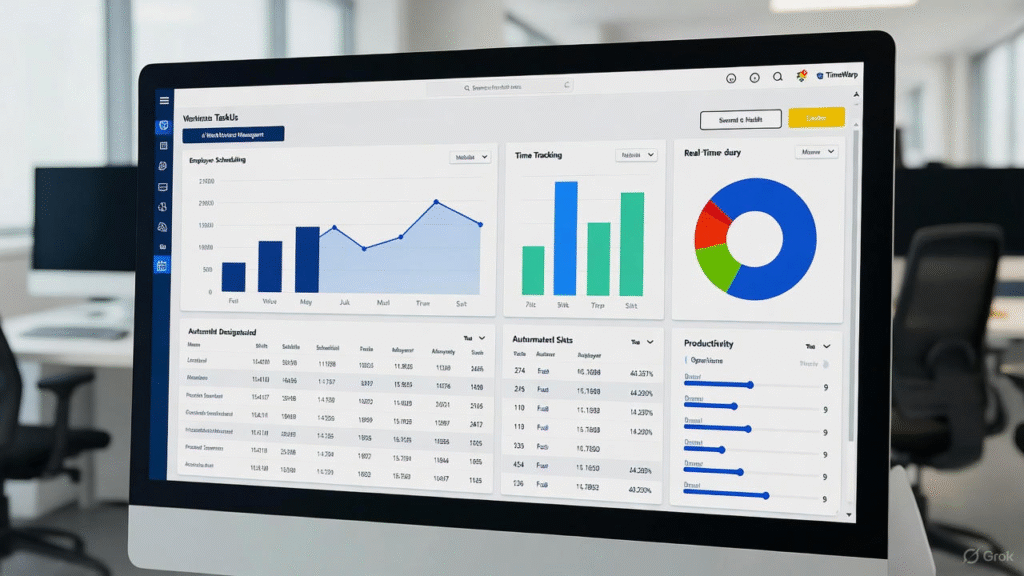
We deliver intuitive visualization interfaces that present workforce metrics through customizable dashboards. Managers monitor key performance indicators including attendance rates, schedule adherence, overtime percentages, and productivity metrics in real-time. Interactive charts and graphs enable drill-down analysis from organizational summaries to individual employee performance.
Dashboard configurations adapt to different management levels, providing executives with strategic insights while offering supervisors operational details required for day-to-day team management. Mobile-optimized dashboards ensure decision-makers access critical information regardless of location or device.
Predictive Analytics and Forecasting
TimeWarp TaskUs incorporates advanced analytics engines that identify trends, predict future workforce requirements, and recommend optimization strategies. Machine learning models analyze historical patterns to forecast staffing needs based on seasonal variations, business growth projections, and service demand fluctuations.
Predictive algorithms identify employees at risk of attrition based on attendance patterns, schedule preferences, and engagement indicators. Proactive retention strategies informed by these insights reduce turnover costs and maintain institutional knowledge within organizations.
Implementation Best Practices
Planning and Requirement Assessment
We recommend comprehensive requirement gathering exercises before initiating TimeWarp implementations. Organizations should document current workforce management processes, identify pain points, and define success criteria for the new system. Stakeholder engagement across HR, operations, IT, and employee representatives ensures diverse perspectives inform implementation strategies.
Technical assessments evaluate existing infrastructure, integration requirements, and data migration complexities. Organizations must allocate sufficient time for data cleansing, validation, and historical data transfer to ensure accurate baseline information in the new platform.
Change Management and User Adoption
Successful TimeWarp implementations require robust change management programs that address organizational culture, communication strategies, and training initiatives. We develop role-specific training materials that prepare employees, supervisors, and administrators for their respective system interactions. Hands-on workshops, video tutorials, and quick reference guides accelerate learning curves and build user confidence.
Communication campaigns explain implementation benefits, address concerns, and establish realistic expectations throughout the transition period. Organizations that invest in comprehensive change management achieve higher user adoption rates and realize return on investment more quickly than those treating implementation as purely technical projects.
Performance Monitoring and Optimization
Post-implementation success requires continuous performance monitoring and iterative optimization. We establish key performance indicators aligned with implementation objectives and track progress through regular assessment cycles. User feedback mechanisms identify enhancement opportunities and address usability concerns promptly.
System administrators review configuration settings periodically, adjusting parameters based on operational experience and evolving business requirements. Organizations schedule quarterly business reviews to assess system effectiveness, celebrate achievements, and plan future enhancements.
Advanced Configuration Options
Custom Workflow Design
TimeWarp TaskUs supports extensive customization to accommodate unique organizational processes. We configure approval workflows that reflect existing hierarchies, delegation rules, and escalation procedures. Custom business rules automate routine decisions, reducing manual intervention and accelerating process completion times.
Organizations define shift patterns, pay codes, leave types, and attendance policies specific to their operational models. The platform accommodates multiple policy sets simultaneously, enabling differentiated workforce management approaches across departments, locations, or employee categories.
Integration with Communication Platforms
We integrate TimeWarp with popular communication tools including Microsoft Teams, Slack, and email systems to deliver timely notifications and facilitate collaboration. Employees receive schedule updates, shift reminders, and approval notifications through their preferred communication channels, improving information dissemination and response rates.
Chatbot integrations enable conversational interfaces for common inquiries such as schedule lookups, leave balance checks, and simple request submissions. Natural language processing capabilities make system interactions more intuitive and accessible for all user skill levels.
Mobile Workforce Management
Employee Self-Service Applications
TimeWarp TaskUs mobile applications provide comprehensive self-service capabilities that empower employees with anytime, anywhere access to workforce management functions. Team members view schedules, request time off, swap shifts with colleagues, and update availability preferences directly from smartphones or tablets.
Push notifications alert employees to schedule changes, shift reminders, and approval status updates, ensuring timely awareness of important information. Offline functionality enables basic operations even when network connectivity is unavailable, with automatic synchronization occurring when connections restore.
Manager Mobile Capabilities
Supervisors access critical management functions through mobile interfaces designed for on-the-go decision making. Managers approve requests, make schedule adjustments, view team attendance, and respond to coverage gaps without requiring desktop access. Emergency notification systems enable rapid communication during urgent situations or unexpected events.
Mobile dashboards present summarized performance metrics optimized for smaller screen formats, ensuring managers maintain operational awareness regardless of physical location. Biometric authentication and device management capabilities ensure secure access to sensitive workforce information from mobile endpoints.
Cost-Benefit Analysis
Return on Investment Considerations
Organizations implementing TimeWarp TaskUs typically achieve positive return on investment within twelve to eighteen months through multiple value streams. Labor cost optimization represents the largest financial benefit, with organizations reducing unnecessary overtime, eliminating scheduling inefficiencies, and improving workforce utilization rates.
Administrative efficiency gains translate to measurable cost savings as managers redirect time from routine scheduling tasks toward higher-value activities such as coaching, development, and strategic planning. Reduced turnover resulting from improved employee satisfaction delivers significant savings in recruitment, onboarding, and training expenses.
Total Cost of Ownership
We calculate total cost of ownership including initial licensing fees, implementation services, ongoing subscription costs, technical support, and internal resource allocation. Cloud-based deployment models minimize infrastructure investments and provide predictable operating expenses through subscription pricing structures.
Organizations should consider hidden costs associated with change management, training development, integration efforts, and temporary productivity dips during transition periods. Comprehensive budgeting that accounts for both direct and indirect expenses ensures accurate financial planning and realistic stakeholder expectations.
Future Developments and Roadmap
Artificial Intelligence Enhancements
TimeWarp TaskUs continues evolving through artificial intelligence innovations that further automate workforce management processes. Natural language processing capabilities enable voice-activated system interactions, making the platform accessible through smart speakers and voice assistants. Computer vision technologies automate attendance verification through facial recognition, eliminating physical time clocks and badge systems.
Reinforcement learning algorithms continuously optimize scheduling strategies based on outcome feedback, automatically adapting to changing business conditions without manual intervention. Sentiment analysis of employee communications provides early warning indicators of engagement issues, enabling proactive management responses.
Expanded Analytics Capabilities
Future platform versions will deliver enhanced predictive capabilities that forecast individual employee performance trajectories, identify skill development opportunities, and recommend personalized engagement strategies. Network analysis features will visualize collaboration patterns, identify influential team members, and optimize team compositions for maximum effectiveness.
Benchmarking capabilities will enable organizations to compare workforce metrics against industry standards, peer organizations, and internal historical performance. Prescriptive analytics will provide specific action recommendations addressing identified performance gaps and improvement opportunities.
Conclusion
TimeWarp TaskUs represents a comprehensive workforce management solution that addresses the complex scheduling, attendance, and operational challenges facing modern customer experience organizations. We recognize the platform’s ability to drive operational efficiency, improve employee satisfaction, ensure regulatory compliance, and deliver measurable return on investment.
Organizations considering TimeWarp implementation should approach the project strategically, investing adequate resources in planning, change management, and optimization activities. The platform’s flexibility accommodates diverse operational models while its robust integration capabilities ensure seamless coexistence with existing technology ecosystems.
Success with TimeWarp TaskUs requires commitment to continuous improvement, user-centric design, and data-driven decision making. Organizations that embrace these principles maximize the platform’s value proposition and establish sustainable competitive advantages through optimized workforce management practices.