 Malina Joseph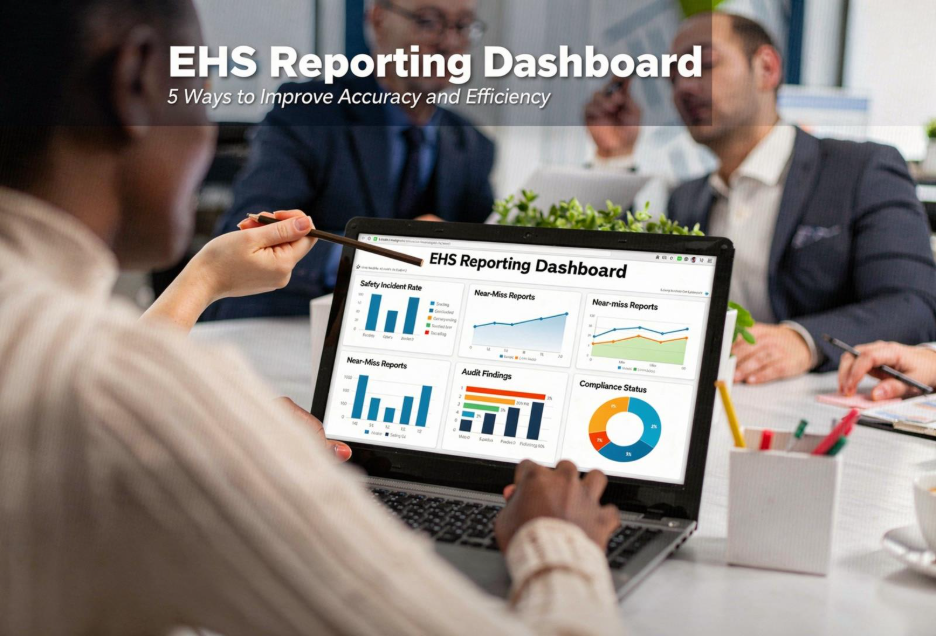
EHS Reporting
Imagine an EHS Director for a massive manufacturing plant. Her name is Sarrah. It’s 6:00 PM on a Friday. Most people are headed home, but Sarah is staring at a literal mountain of crumpled paper.
Some reports have coffee stains. Some are written in handwriting so bad it looks like a secret code. There’s a “near-miss” report from three days ago she just found at the bottom of the pile. Someone almost lost a hand, and she’s just now hearing about it. That’s the pain.
It’s the “data lag” that keeps you up at night. When your reporting is slow and messy, you aren’t managing safety; you’re just documenting history. Data-driven safety programs change the game by killing the paper trail.
By using EHS management software, Sarah can spot a hazard the second it happens. It turns “I think we’re safe” into “I know we’re compliant.” It’s about reducing risk before the next shift even starts.
Why Accuracy and Efficiency Are Your Lifeblood
In the safety world, bad data is actually worse than no data. If your reports say everything is fine, but the floor is covered in oil leaks, you’re flying blind. You need accuracy so you know what to fix. You need efficiency so you have time to actually fix it. If you spend 40 hours a week doing data entry, you aren’t out on the floor leading. You’re just a glorified clerk. Let’s look at five ways to fix this mess and get your safety culture into the 21st century.
Ditch the Paper and Go Mobile
Let’s be real. Paper is the enemy of accuracy. It gets lost. It gets dirty. People wait until the end of the week to fill it out, and then they forget the details. “Was the wire frayed or completely broken? Eh, I’ll just check ‘fraid’ and call it a day.”
This is where a mobile EHS app saves the day. When a worker sees a hazard, they pull out their phone. They snap a photo. They voice-to-text the description. It happens right there, in the moment. The accuracy goes through the roof because the memory is fresh. Plus, it’s much more faster.
No more walking back to the office to find a form. You capture the data, hit send, and the EHS management software does the rest. It’s instant, clean, and impossible to lose in a desk drawer.
Standardize Your Checklists (Keep It Simple)
If you ask five different supervisors what a “safe workstation” looks like, you’ll get five different answers. One guy cares about ergonomics. The other cares about wire management. This inconsistency kills your reporting accuracy. You can’t compare data if everyone is measuring differently.
You need to build standardized, digital checklists inside your EHS management software.
- Yes/No Questions: Don’t leave room for “maybe.”
- Mandatory Photos: If they mark something as “failed,” make them take a picture.
- Conditional Logic: If they say a machine is broken, the app should automatically ask “Is it locked out?”
This keeps everyone on the same page. It turns your reporting into a science. When your data is standardized, you can finally see real trends. You’ll notice that “Safety Zone A” always fails on the same three points. Now you have a target. You don’t have to guess; the numbers are shouting the answer at you.
Real-Time Analytics and Instant Alerts
Waiting for a monthly report to see your incident rates is a recipe for disaster. That’s like checking your bank balance once a year. You need to know what’s happening right now.
Modern EHS management software gives you live dashboards. If a high-severity incident is logged on the mobile EHS app, you should get a ping on your phone immediately. This efficiency allows for “intervention in the moment.”
Imagine a spill in the chemical wing. Without a digital system, that report might sit in an inbox for four hours. With live alerts, the cleanup crew is there in ten minutes. You just prevented a slip-and-fall and a massive environmental fine. That is the power of real-time data. It moves you from reactive “firefighting” to proactive prevention. It makes your whole team look like heroes because you stop the problem before it grows legs.
Automate the Follow-Up (Close the Loop)
The biggest complaint workers have is: “I report stuff, but nothing ever happens.” This kills your safety culture. If people think their reports go into a black hole, they’ll stop reporting. Accuracy drops because people stop caring.
You gotta automate the “Corrective Action” process. When a hazard is identified in the mobile EHS app, the EHS management software should automatically create a task.
- Assign it: Give it to a specific person.
- Date it: Set a hard deadline.
- Track it: The system should nag them until it’s done.
This efficiency builds trust. When a worker sees a broken light fixed 24 hours after they reported it on their phone, they feel heard. They start looking for more things to report. Your data gets much better because the “front line” is engaged. It turns safety from a “management thing” into a “team thing.”
Simplify the User Experience (UX)
If your software looks like it was built in 1998, nobody is going to use it. If it takes fifteen clicks to report a near-miss, people will just skip it. Efficiency dies in the face of bad design.
You need a platform that is “ultra-intuitive.” It should be as easy to use as Instagram or Amazon.
- Big Buttons: Great for guys wearing gloves.
- Offline Mode: It’s gotta work in the basement or the remote field site.
- Visual Cues: Use icons instead of long sentences.
When the tech is easy, your accuracy spikes because you get “total participation.” You aren’t just getting reports from the safety nerds; you’re getting them from the contractors, the drivers, and the floor staff. More eyes mean less risk. A good mobile EHS app should feel like a tool that helps them do their job, not a chore that gets in the way.
The ROI of Smarter Reporting
Let’s talk money for a second. Some bosses think safety tech is just a cost. They are wrong. It is a massive savings engine.
- Reduced Admin Time: Sarah (our safety director) saves 10 hours a week on data entry. That’s 10 hours she spends coaching the team.
- Lower Fines: Being “always audit-ready” means you don’t get hit with those $15,000 “paperwork errors” from OSHA.
- Lower Insurance: Carriers love companies with low TRIR (Total Recordable Incident Rate) and high data transparency.
When you improve accuracy and efficiency, you aren’t just “staying safe.” You are running a much better business. You’re protecting your brand. One big, preventable accident can ruin a company’s reputation for a decade. Digital reporting is your shield.
Finding the “Hidden” Hazards
The best part of data-driven safety? It finds the stuff you didn’t even know was a problem. By analyzing thousands of reports in your EHS management software, the system might find a pattern. “Hey, we have a spike in hand injuries every time the humidity hits 80%.” Why? Maybe the gloves get slippery.
You’d never find that on a paper form. You only find it when you have clean, efficient data working for you. This is “Predictive Safety.” It’s the holy grail. You change the gloves before the humidity hits, and suddenly, nobody gets hurt. That’s the dream, right?
Governance and Compliance
Compliance is a beast that never sleeps. OSHA regulations change. ISO standards update. Keeping up with a spreadsheet is a suicide mission. Digital platforms automate the governance. They track your training matrix, your permit renewals, and your SDS (Safety Data Sheets) automatically.
If an inspector walks in, you don’t panic. You don’t go looking for Sarah’s mountain of paper. You pull up the dashboard. You show them the audit trail. Every incident, every fix, and every training session is timestamped and verified. It shows you have a “mature” safety culture. It builds trust with regulators. It shows you have nothing to hide.
Implementing the Change
So, how do you start? Don’t try to flip the switch overnight.
- Pilot it: Pick one site or one department. Get them on the mobile EHS app.
- Listen: Ask the guys on the floor what they hate about the app. Then fix it.
- Show the Wins: When a reported hazard gets fixed fast, tell everyone.
Change is scary for people. But when they see that the tech actually protects their buddies and makes their day easier, they’ll jump on board. You’re building a “Safety First” mindset, backed by “Data First” tech.
Conclusion: The Future of EHS
The world is getting more faster. The risks are getting more complex. You cannot manage a modern facility with 20th-century tools. Improving your EHS reporting accuracy and efficiency is the single best thing you can do for your organization this year.
By embracing a mobile EHS app and robust EHS management software, you empower your people. You protect your assets. And you ensure that at 6:00 PM on a Friday, Sarah isn’t staring at a pile of paper. She’s headed home, knowing her team is safe and the data is locked in. Stop guessing. Start knowing. Your team’s lives depend on the quality of your data.
About the Author
